The nights are drawing in, and for anyone running gearboxes, motors and inverters outdoors or in cold buildings, winter brings its own scares. Water treatment sites, access control barriers, cold stores and refrigerated transport all put drives through low temperatures, damp and frost.
Four things worth checking pre-frost
Cold starts. Thicker oil is slower to reach gears and bearings at start-up, especially in worm gearboxes, so check the lubricant suits the lowest temperature on site.
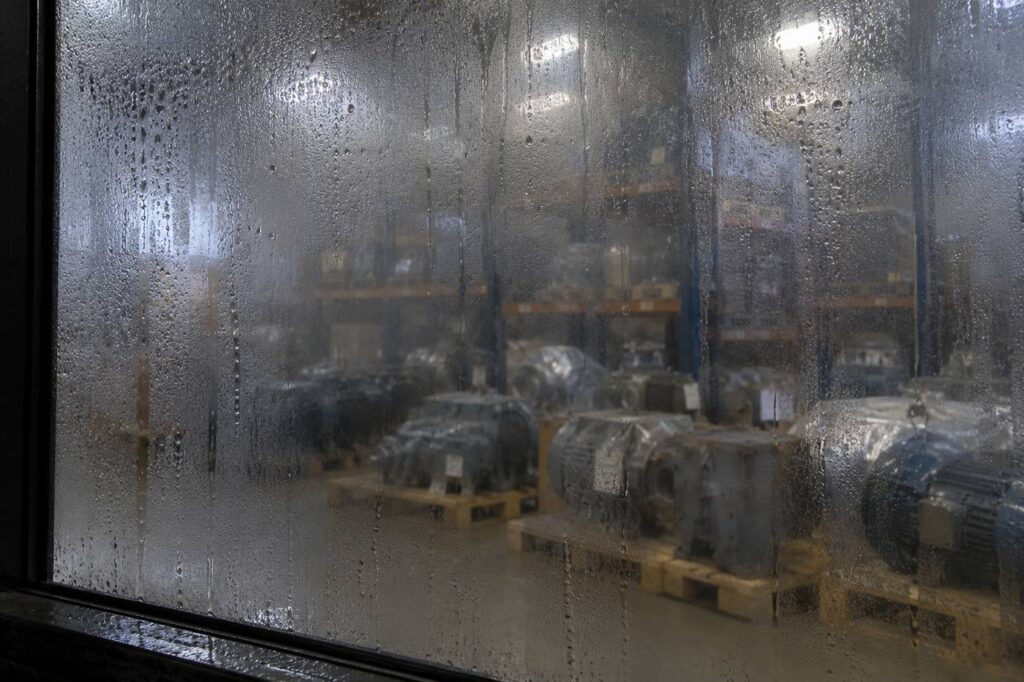
Condensation. Warming and cooling draws damp air into motors, geared motors and gearboxes, where the moisture rusts parts and damages winding insulation.
Cold control panels. Inverters (variable speed drives) in unheated cabinets can drop below their minimum operating temperature, causing trips and faults.
Outdoor equipment. Rain, frost, grit and road salt get past worn seals and cable entries on barriers, pumps and conveyors.
Most winter breakdowns don’t happen out of nowhere. The warning signs are usually there weeks before. Below, we explain how to spot them and where our engineers can help.
Gearbox oil in cold weather
As oil cools, it thickens and flows more slowly. At a cold start, gears and bearings can run briefly with too little lubrication, adding wear every time the drive starts. Worm gearboxes are most exposed because they rely on a good oil film between the worm and the wheel.
Synthetic oils generally flow better in the cold than mineral oils. The grease in motor bearings stiffens just as oil thickens, so a low-temperature grease may be worth considering for motors that start from cold outdoors. Not sure which grade you need? Send us the gearbox details and we’ll confirm it before you change anything.
Seals, gaskets and coatings in low temperartures
Rubber shaft seals lose flexibility as they cool. A hardened seal lip may not follow the shaft properly, letting oil out and water in, and ice forming on a shaft can tear a seal lip at start-up. Gaskets shrink and harden too, and repeated warming and cooling can loosen bolted joints. If seals keep failing, the drive may not suit the conditions. We can review the application and recommend a better match.
Inverters in cold control panels
Inverters, also called variable speed drives, have a minimum operating temperature as well as a maximum one. In an unheated cabinet in a pump house, yard or cold store, the temperature inside the panel can fall below that limit overnight. The result is nuisance trips, display faults and, when the panel warms up again, condensation on the circuit boards.
Check the minimum ambient temperature in the inverter’s manual and compare it with the coldest conditions the cabinet sees. A thermostatically controlled panel heater keeps the cabinet above that limit. Leaving the inverter powered while the machine is idle also helps, because its own losses keep the electronics slightly warm. If an inverter trips on a cold morning, note the fault code before you reset it, as it tells us a lot about the cause.
How to prevent condensation in electric motors
Damp insulation loses its resistance, which can cause an earth fault the moment the motor is switched on. For motors and geared motors that stand idle in cold, damp places, an anti-condensation heater keeps the windings warm and dry. We can advise whether your motors need one. Before restarting a motor that has been idle for a long time, have its insulation resistance tested.
Protecting outdoor motors and gearboxes in winter
Drives on barriers, car park equipment, pumping stations and outdoor conveyors face rain, frost, grit and, near roads, salt spray. Over winter these find their way past worn shaft seals, damaged cable glands and chipped paint.
Check that each motor’s IP (ingress protection) rating suits its exposure. A motor rated for a sheltered position may not cope with driving rain or hose-down cleaning. Make sure drain holes sit at the lowest point for the way the motor is actually mounted, which is easy to get wrong when a drive is fitted in a non-standard position. Repair damaged coatings before rust takes hold. If outdoor drives keep failing, the cause is often the specification rather than the maintenance, and we can recommend a better match.
How to store gearboxes and motors over winter
Drives held in stock or waiting on site for installation need the same care. Store them indoors in a clean, dry place with a steady temperature, off the floor and away from vibration. Keep them in their original packaging and leave the protective coating on shafts until fitting.
Our products come with a five-year warranty, but damage caused by poor storage, condensation or unsuitable lubricant is not covered. If you’re holding stock for a project, ask us for storage guidance for the units you’ve ordered.
Winter maintenance checklist: gearboxes and motors
Safety first. Before any check, stop the drive, isolate it and lock it off. Electrical checks and tests should be carried out by a qualified person.
1) Check the oil. With the gearbox stopped and cool, check the level and colour at the sight glass or level plug: milky oil means water has got in, and dark oil with a burnt smell points to overheating. If the gearbox is filled for life with no level plug, don’t open it; contact us instead.
2) Check seals and gaskets. Wipe around the shaft seals and housing joints, run the drive, then look for fresh oil or dirt clinging to oily patches.
3) Check breathers and drain holes. Make sure the gearbox breather sits at the highest point and the motor drain holes at the lowest, with both clear and not painted over.
4) Check heaters. Ask an electrician to confirm motor and panel heaters are wired correctly and switch on when needed.
5) Check inverter ratings. Leave a minimum and maximum thermometer in the cabinet for a week and compare the reading with the inverter’s minimum operating temperature.
6) Check outdoor kit. Look for loose fixings, damaged coatings, leaking cable glands and water pooling around the drive, and confirm each motor’s IP rating suits its location.
7) Check stored units. Turn each shaft by hand a few times and check for condensation or rust.
How Brown GearTech can help
If any of these checks turn up something you’re unsure about, talk to us. Our engineers can:
- check whether your existing gearbox, motor or inverter is right for its operating conditions
- confirm the right lubricant for your gearbox and site
- advise on heaters, seals, IP ratings and protection for outdoor or damp locations
- identify an unknown drive from photos of its nameplate and installation
- supply a replacement gearbox or motor selected for the real conditions, not just the original part number
Send us the application details and photos, and you’ll get a straight technical answer from an engineer.
Frequently Asked Questions
Does cold weather damage gearboxes?
Cold itself rarely causes damage, but its effects do. Thick oil, hardened seals and condensation all shorten a gearbox’s life if they’re not managed.
What oil should I use in a gearbox in winter?
Use a lubricant rated for the lowest temperature your gearbox will see. Synthetic oils usually perform better in the cold. Send us the gearbox details before changing grade or type, and we will confirm the right one.
Why is there water in my gearbox oil?
It’s usually condensation. As the gearbox heats and cools, it draws in damp air, which condenses inside. Milky or cloudy oil is the usual sign, and the oil should be changed.
How do I stop condensation in an electric motor?
Keep drain holes clear and at the lowest point, and fit an anti-condensation heater on motors that stand idle in cold or damp places.
What does an anti-condensation heater do?
It gently warms the motor windings while the motor is switched off, keeping them above the temperature at which moisture forms.
Why does my motor trip on cold mornings?
Thick oil increases the load at start-up, so the motor draws more current and can trip its overload. Damp windings can also cause earth faults.
Why does my inverter trip in cold weather?
The cabinet may have fallen below the inverter’s minimum operating temperature, or condensation may have formed on the electronics as the panel warmed up. A thermostatically controlled panel heater usually deals with both.
What is the minimum operating temperature for an inverter?
It varies by model, so check the inverter’s manual. If the cabinet gets colder than that, fit a panel heater or move the inverter somewhere warmer.
What IP rating does an outdoor motor need?
It depends on the exposure. A sheltered outdoor position needs less protection than one facing driving rain, salt spray or hose-down cleaning. Send us details of the location and we will recommend a suitable rating.
Why is my gearbox leaking oil in winter?
Seals harden in the cold and can stop sealing properly against the shaft. A seal damaged by ice at start-up can also leak.
How should I store a gearbox or motor long-term?
Indoors, clean, dry and at a steady temperature, off the floor and away from vibration. Turn the shaft by hand every few weeks. It’s worth getting right, because our five-year warranty does not cover damage caused by poor storage.
SPEAK TO OUR TEAM TODAY
If you’d like tailored advice on gearbox specification, speak to our engineering team today.