Behind every product that leaves the factory floor is a design engineer planning in extensive detail, drawing your product until satisfied, measuring key components for accuracy and identifying areas of improvement before any drawings are finalised. It’s a role many people don’t fully understand, often assumed to be purely technical drawing rather than problem-solving.
However, the job is a mental challenge that constantly requires focus and thinking of how the product is supposed to work and how to get there.
From emails to encoders
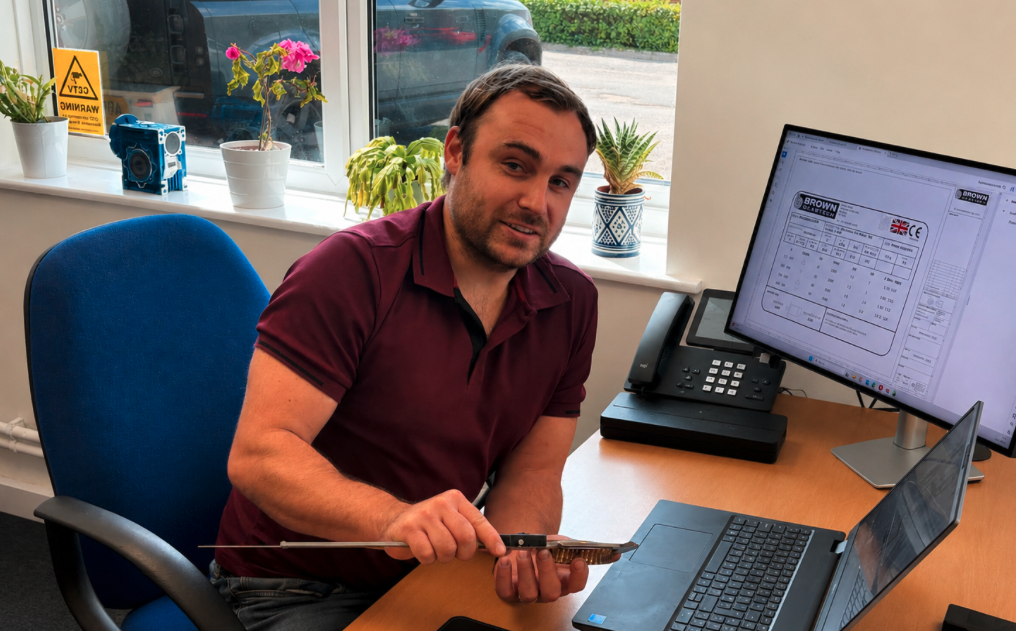
For Joe, our Engineering Design Manager and CAD Technician, the job is a mix of planning, judgement, problem solving, and hands-on collaboration with the shop floor. From answering supplier emails first thing to finishing CAD drawings late in the day, no two days look quite the same. This is a career built on a lifelong interest in how things work and wanting to discover the true function of products powering machines used every day.
The day usually starts with answering overnight emails from the team or suppliers that operate within a different time zone. Before diving into design work, Joe first asks questions that concern his projects and writes down tasks he needs to complete.
Then he heads down to the shop floor to see what is happening before returning to his desk to work on projects, whether it is finishing them or getting them to a good stage for the day. “It’s about seeing what’s new,” Joe explains, “keeping a live picture of where projects stand.” The day often winds down with online training, and right now, that’s a course on encoders.
Assessing what’s actually feasible
When a bespoke enquiry lands on his desk, the first job is to assess feasibility from an engineering perspective. This means considering stress factors, load factors, torque values and any specifications. Only once he’s established whether something is capable of its intended purpose, manufacturable and cost-effective, he can go back to sales with cost, time and feasibility.
Not every enquiry reaches him this way, though. Standard requests go straight through sales, since that’s the point of having a standard product range. It’s the bespoke ones, outside the normal catalogue, that get escalated for an engineering view, including whether it can be manufactured here or would need to go elsewhere.
Joe has turned requests down before. One recent enquiry asked for a custom motor that fell outside the company’s remit of supply entirely. The physical form simply couldn’t be produced, it wouldn’t have been fit for purpose, and the cost would have far outweighed what the customer was willing to pay. Better to say so early than let a bad idea run.
Early Stages
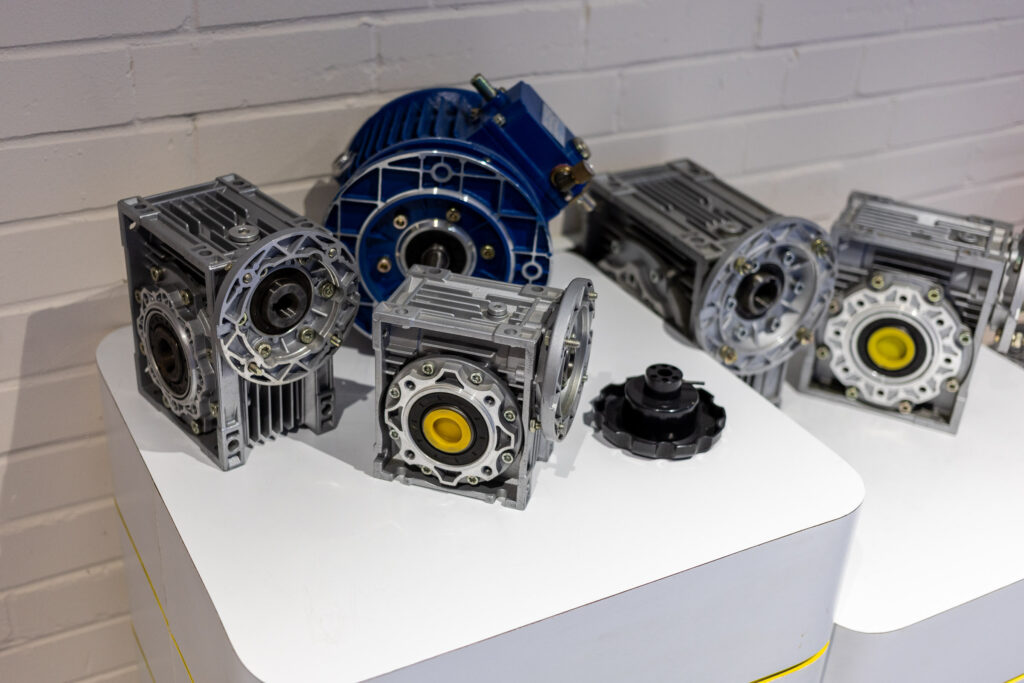
The planning then starts, and every plan starts as a sketch on paper until he feels it is in enough detail to be transferred online to CAD and software called SolidWorks. This software allows for 3D designs of product ranges, STEP files for customers and data management inhouse. CAD ensures ideas can be put into virtual representations that are dimensionally accurate. This grants the ability to check the fitment of custom shafts in gearboxes and any interferences so they can be rectified. CAD can quickly put together professional drawings, consequently speeding up production.
Where accuracy really matters
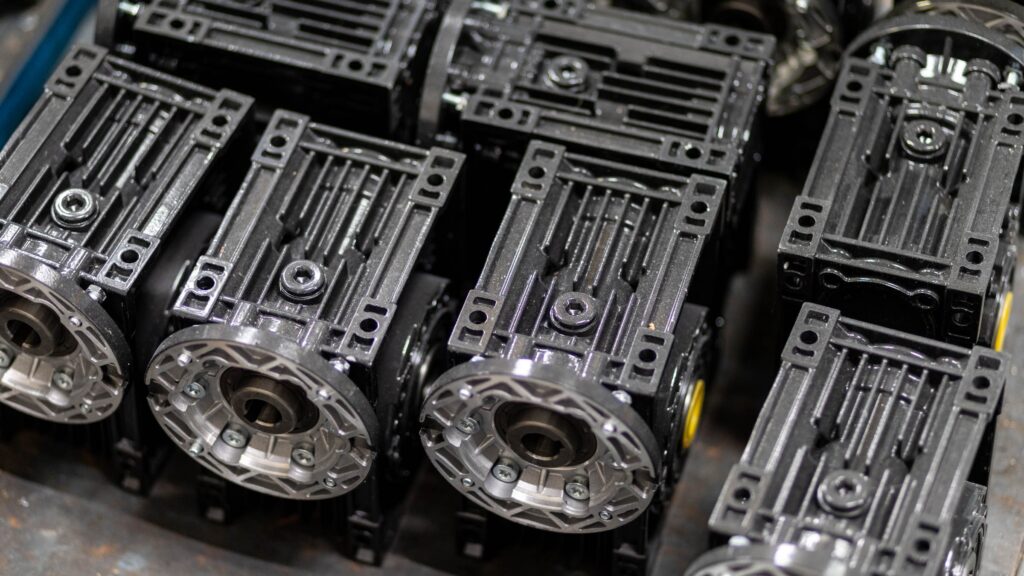
Once a design has taken shape, it’s passed to the shop floor via printed drawings from CAD. Joe then discusses these drawings with the head engineer, touching upon topics such as whether any improvements need to be made, whether the drawings are accurate enough to be used and whether there is enough detail within them. This is the part where any implications have to be picked up.
“If a drawing is in error, it has the risk of impacting a wider application which can lead to prolonged cost and time issues. This has the potential of harming the business’s reputation as customers buy the product in good faith and potentially misleading information has been provided.”
If the drawings provided internally are in error, the part has to be remade, which can impact people on the shop floor, impact material and labour costs and impact lead times. It can also cause a knock-on effect with other orders needing to be made.
“Everything increases,” Joe says simply. “It jeopardises the smooth, efficient running of the whole operation.”
If there are no faults with the drawings, then the workshop can get to work, and Joe can be given a rough estimate of how long the product will take so it can be passed onto the sales team to be relayed back to the customer.
Where precision prevents problems
What looks like a small detail on paper can have a huge impact, such as footprint dimensions and shaft and bore diameters. Footprint dimensions determine if the product range will fit within a given space. Shaft and bore diameters determine if our drive products will fit into customer machines. Version control is ‘extremely important’ as previous iterations may be out of date, and therefore not accurate to the current build. “Every step is a specific process,” Joe notes, “and it needs to be completed with as much care and accuracy as possible, to keep risk out of it at every point.”
Bridging the gap
There’s also a common misunderstanding between the shop floor and design office where the shop floor asks why drawings and plans take so long, thinking they do the hardest work, but the mental workload behind drawings isn’t visible. Joe wants “to try to bridge the gap between the shop floor and the drawing office. It’s a hybrid role, really.”
A day can also be a mix of planned and reactive for Joe, due to the nature of the company. Within a project, days can be well planned for that period, but in between projects there is a risk of falling more into a trap of responsive works, “a consequence of having a wide source of clients from different industries.”
A career built on passion
For Joe, the appeal has always come down to enjoying engineering, figuring out how things work.
“I don’t think people really know what goes into it,” Joe says. “A lot of it requires real focus. You can come across as withdrawn, but that’s just the nature of the game.”
This interest is deep rooted, going back to projects at school, an apprenticeship and ending with an engineering degree.
What motivated him to join us was that he knew of the company beforehand and how we worked, which built a sense of trust and familiarity.
“I knew I’d be in good hands. Understanding the company’s history and legacy meant a lot to me, but honestly, it was the exciting new developments that sealed the deal.”
Ultimately, design engineering is about more than producing drawings. It’s about making sure everything fits, functions, and holds up while performing.
As Joe puts it, a good engineer is someone who can be trusted to use their own judgement and can mentor others effectively.
While the role may go unnoticed by many, it remains a specific and critical part of what we do. Engineers are often trusted to work independently, precisely because the role is so fundamental to how the business runs day to day.
For those starting out, his advice is simple. Observe, listen, and take everything in. “You’re not expected to know it all, and your time will come in the future.” Looking back at his own early days as an apprentice, Joe admits it’s a lesson he had to learn himself: “I couldn’t really listen to seniors. You think you know best when you’re young, and there’s always nerves involved too.”
It’s a job Joe continues to enjoy because of the satisfaction in figuring out how things come together and being able to pass on skills to younger people.
SPEAK TO OUR TEAM TODAY
If you’d like tailored advice on gearbox specification, speak to our engineering team today.